White Castle Menu Nutrition Facts & Dietry Counts
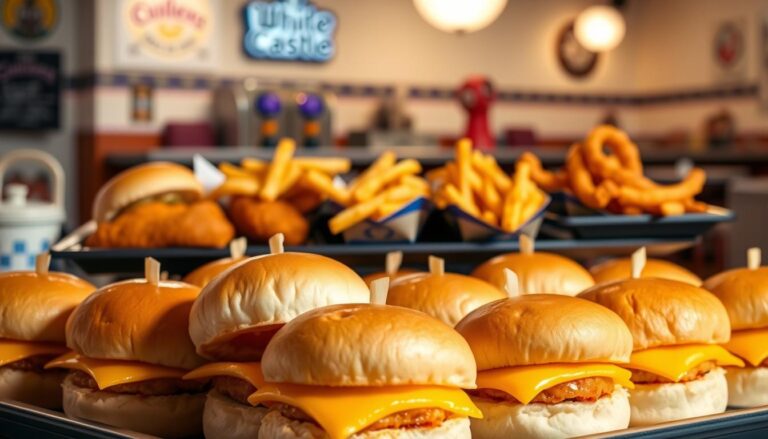
Looking for white castle menu nutrition you can use before you order? This quick guide gives a clear answer: the Original Slider and the Cheese Slider each register about 140 calories per serving, so small bites add up fast.
Think of this as an FAQ-style snapshot. You’ll get clear categories, quick comparisons, and a simple way to spot “small” items that inflate a meal.
The baseline examples are familiar: the original slider and the cheese slider show typical portion size and calorie range for many items. Here, “dietary counts” means calories plus label-style nutrition facts and practical ordering tips for common needs.
Menu facts can vary by location, portioning, and updates. This intro previews how to read labels, a category-by-category breakdown, and diet-friendly ordering tips that cut guesswork.
Bottom line: start with sliders as your benchmark, watch the calories per slider, and use the upcoming sections to verify current facts and tailor choices to your goals.
How to Read White Castle Nutrition Facts, Calories, and Daily Value
Start with the serving size. The label lists what counts as one serving—often a single slider, a side, or a sauce packet. That number determines the rest of the line-item totals.
Next, check calories and then scan key macros like total fat. Use the % Daily Value to see what’s a lot for a 2,000-calorie day. Higher percentages mean the item fills more of your daily allotment.
Quick serving examples
A ketchup packet adds about 10 calories. Mayo is roughly 60 calories. A ranch cup can be 150 calories. Those small add-ons change totals fast.
Using the calculator
Use the White Castle Nutrition Calculator to confirm current values, especially for new or regional items. Record serving and calories to compare choices.
Important disclaimers
This page shares general facts for guidance, not medical advice. Needs vary by age, activity, and health. For medical or nutritional advice, do not rely on this site. Please consult a dietician or medical doctor instead.
| Item | Serving | Calories |
|---|---|---|
| Ketchup packet | 1 packet | 10 |
| Mayonnaise packet | 1 packet | 60 |
| Ranch cup | 1 cup | 150 |
white castle menu nutrition by Category: Calories and Key Menu Facts
Use this quick breakdown to compare calories and allergens across popular sliders, sides, and breakfasts.
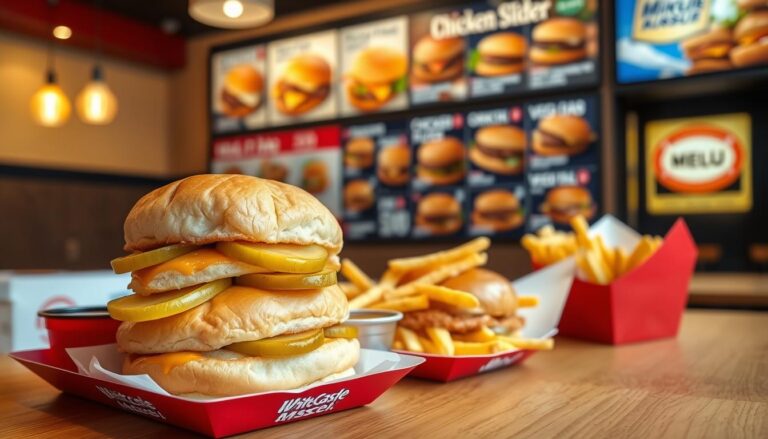
Iconic sliders and cheeseburgers give a reliable baseline. The Original Slider and Cheese Slider each average 140 calories. Doubles and add-ons raise counts—Double Original is about 250 calories; Double Cheese is roughly 300.
Plant-based picks sit higher than the smallest sliders. The Impossible Slider runs about 190 calories. Add smoked cheddar and you jump to 230 calories and introduce dairy allergens.
Chicken and fish choices span a clear range. Grilled Chicken Slider is near 180 calories. The Chicken Breast Slider is about 220. Fish Slider is the largest here at 340 calories. For a snack, three Chicken Rings are roughly 160 calories.
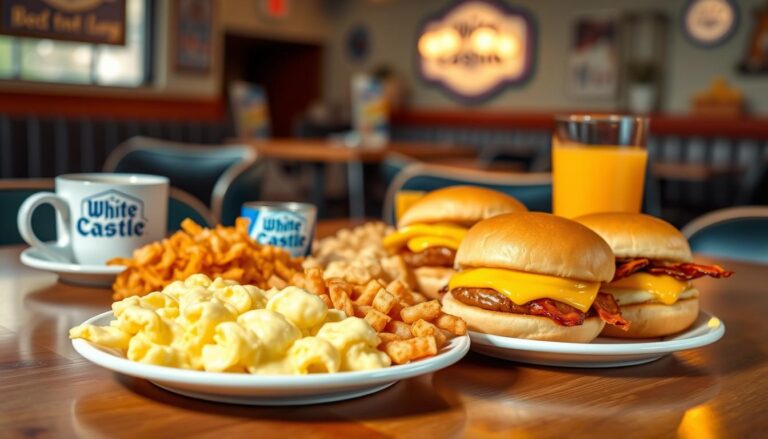
Breakfast items vary by format. Breakfast Sliders with egg and cheese start at 160 calories. Toast sandwiches and sausage variants climb to 380–390 calories depending on fillings.
Waffles trend higher. Two Waffles with syrup is about 280 calories; Waffle Breakfast Sliders range from 290 to 440 calories. Syrup adds ~120 calories per container.
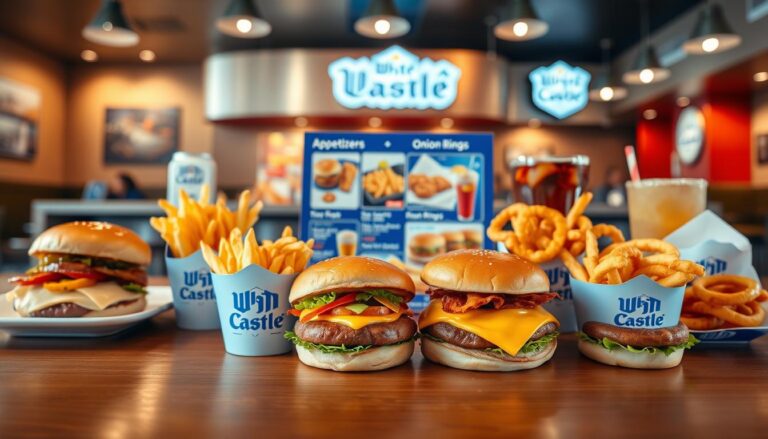
Sides, seafood, desserts, drinks, and condiments can quickly change a meal total. Small fries start near 330 calories and sacks can exceed 700. Large chocolate shakes top 1,000 calories—watch serving size.
- Sides & snacks: portion sizes drive totals—fries, onion chips, and hash rounds can be major calorie sources.
- Seafood: served in small/medium/sack sizes for easy comparison (clam strips, fish nibblers).
- Condiments: ketchup is low (10 cal); mayo and dipping sauces add fat and calories fast.
- Grocery items: at-home sliders often have different facts—always check the package label.
| Item | Price | Calories | Vegan/Keto/Gluten-Free | Allergens |
|---|---|---|---|---|
| Original Slider | varies by location | 140 | Not vegan/Keto | Dairy, Wheat |
| Cheese Slider | varies by location | 140 | Not vegan/Keto | Dairy, Wheat |
| Double Cheese Slider | varies by location | 300 | Not vegan/Keto | Dairy, Wheat |
| Impossible Slider | varies by location | 190 | Vegan option | Soy, Wheat |
| Impossible w/ Smoked Cheddar | varies by location | 230 | Not vegan | Dairy, Soy, Wheat |
| Grilled Chicken Slider | varies by location | 180 | Keto-friendly option possible | Wheat |
| Fish Slider | varies by location | 340 | Not keto | Fish, Wheat |
| Chicken Rings (3) | varies by location | 160 | Not vegan | Wheat |
| Breakfast Slider (Egg & Cheese) | varies by location | 160 | Not vegan | Egg, Dairy, Wheat |
| Breakfast Toast (Sausage, Egg & Cheese) | varies by location | 380 | Not vegan/Keto | Egg, Dairy, Wheat |
| Waffle Breakfast Slider (Egg & Cheese) | varies by location | 290 | Not vegan | Egg, Dairy, Wheat |
| Two Waffles w/ Syrup | varies by location | 280 | Not vegan | Wheat |
| French Fries (Small) | varies by location | 330 | Vegan | None declared |
| Onion Chips (Sack) | varies by location | 1350 | Not vegan | Wheat |
| Gooey Butter Cake | varies by location | 220 | Not vegan | Dairy, Wheat |
| Chocolate Shake (Large) | varies by location | 1050 | Not vegan | Dairy |
| Ketchup Packet | varies by location | 10 | Vegan | None |
Diet-Friendly Ways to Order at White Castle Without Guessing
A few simple swaps help you enjoy a slider run without busting your daily targets. This short playbook shows practical choices that cut excess calories while keeping flavor.

Lower-calorie swaps using real examples from the menu
Choose coffee (5–20 calories) or unsweetened iced tea (about 5 calories) instead of Southern Sweet Iced Tea (180–340 calories). Pick a ketchup packet (10 cal) or mustard over mayo (60 cal) or ranch (150 cal).
For a plant-based pick, the Impossible Slider is about 190 calories. Adding smoked cheddar raises it to roughly 230 calories. Cheese and cheddar are small changes that move totals and allergens quickly.
High-calorie watchouts: large shakes, loaded sides, and share-size sacks
Big items spike totals fast. The large Chocolate Shake runs about 1050 calories. Share-size sacks—onion chips (1350 cal) or hash round sacks (1440 cal)—add massive calories when grabbed by the bag.
Loaded Fries (460 cal) and Cheese Fries (400 cal) often surprise diners. When value and cravings collide, pick a smaller portion or share.
Small add-ons that change totals fast: cheese, sauces, syrup, and sugar
Maple syrup adds ~120 calories per container. Treat sugary extras as intentional choices, not defaults. Count cheese, sauces, and syrup before you order.
- Budget your meal: pick one main slider, one side, then decide on sauces or dessert.
- Counter checklist: confirm serving size, count sauces, consider cheese, and choose drink size.
- Smart swap: unsweetened iced tea or coffee + ketchup over sweet tea + mayo saves hundreds of calories.
| Choice | Lower-calorie Option | Watchout |
|---|---|---|
| Beverage | Coffee / Unsweetened Iced Tea (5–20 cal) | Southern Sweet Iced Tea (180–340 cal) |
| Side | Small Fries or share | Loaded Fries / Sack sizes (400–1440 cal) |
| Add-ons | Ketchup (10 cal) | Syrup (120 cal) / Ranch (150 cal) |
Conclusion
Wrap up your order plan by prioritizing serving size, then calories, then the label facts. Use that order to compare choices quickly and avoid surprises when adding sides or sauces.
You don’t need to guess. Category anchors, the calculator, and mindful add-ons make choices predictable. Pick a main item, then adjust sides, drinks, and extras to match your goals.
The facts here are for general informational purposes and use a 2,000‑calorie daily reference. For personalized guidance, consult a dietician or doctor.
Next step: revisit the category table or use the White Castle menu nutrition calculator to confirm current numbers for the exact food and portion you plan to order.